Roof covering and material selection
Compare suitable shingle, metal, or other roof-covering options by appearance, weight, installation method, and the manufacturer’s system requirements.
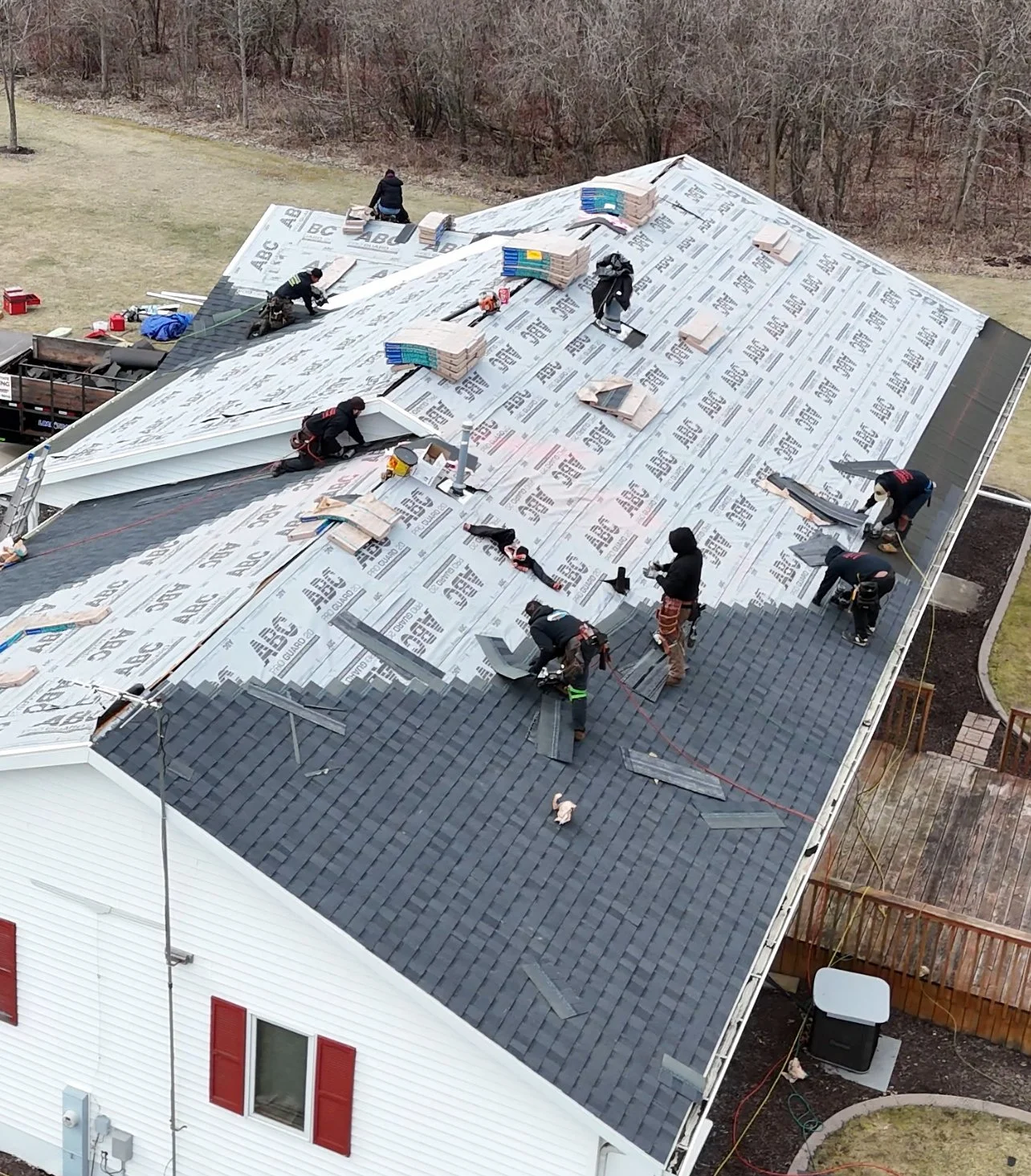
Residential service · Roof replacement & installation
A full roof project coordinates covering, underlayment, edges, ventilation, and drainage across the entire roof. Explore complete residential roof replacement and new roof installation as whole-roof projects.
Service overview
A new installation or full replacement involves more than the visible surface. Materials, water-shedding layers, edges, and ventilation form one coordinated roof assembly.
Compare suitable shingle, metal, or other roof-covering options by appearance, weight, installation method, and the manufacturer’s system requirements.
The roof deck provides the base for the assembly. Underlayment and related layers are selected and installed as part of the full system design.
Roof edges, valleys, and changes in plane require compatible components and careful sequencing so the completed assembly manages water as intended.
Intake and exhaust ventilation, penetrations, and roof geometry are considered together when planning a complete installation for the structure.
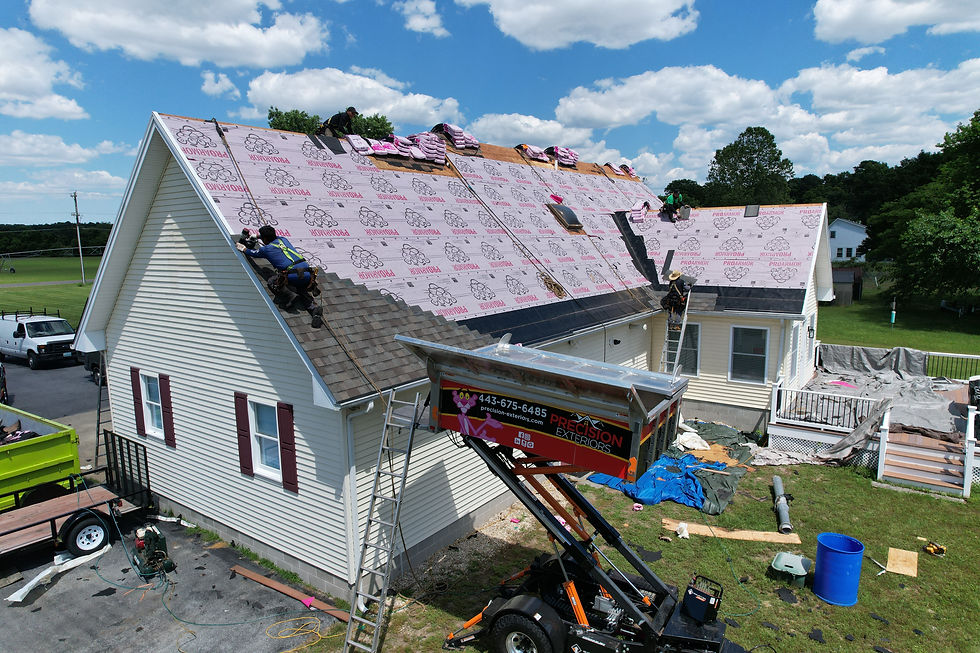
A closer look
The roof covering sits within a larger assembly of underlayment, transitions, edges, and ventilation. Material specifications and roof geometry guide how those components meet across the full installation.
Whole-roof assembly
The selected covering, roof geometry, and system requirements determine how the full installation comes together.
The structural base and roof planes establish the layout for the new assembly.
This layer is selected and installed to suit the complete roof system.
Material profile, course or panel layout, and finish carry across the full roof.
Ridges, eaves, transitions, and attic ventilation are coordinated with the roof design.
Material choices
Appearance, weight, installation details, and compatible system components all belong in a whole-roof choice.
Profile and color options shape the finished roof; layout follows the selected product specifications.
Panel form, seams, and attachment pattern are coordinated across roof planes.
The building design and material specifications determine which full-system options fit.
Good to know
The whole-roof project coordinates the selected covering, underlayment, edges, ridges, transitions, and ventilation as one system.
Yes. New residential construction can be scoped for a complete roof installation suited to the structure and selected materials.
Asphalt shingles, metal panels, and other available coverings differ in profile, appearance, weight, and installation specifications.
Roof pitch, valleys, intersecting planes, material profile, access, and the building design influence the full-roof sequence.
Service options